The Complete Grant Directory for Independent Journalists: Global Philanthropic and Press Freedom Funds
A curated international funding directory for freelance reporters, investigative collectives, and exiled newsrooms, featuring award criteria and proposal writing frameworks.
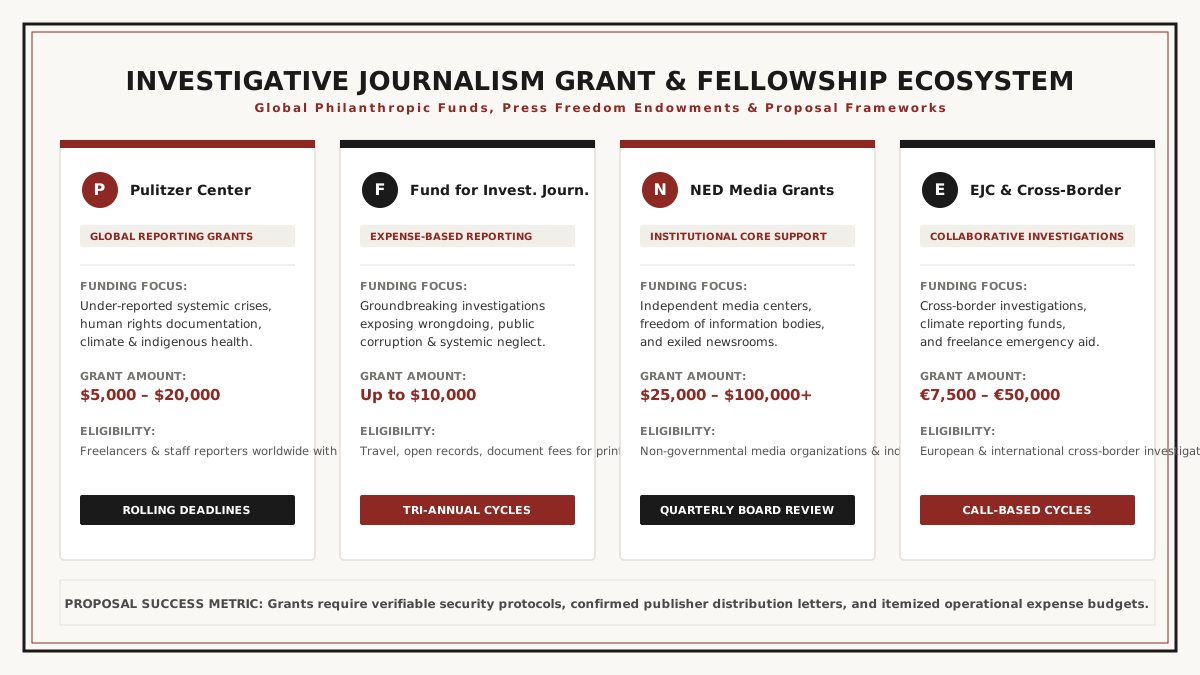
Investigative reporting is expensive. Documenting state corruption, conducting digital forensic investigations, accessing satellite telemetry, and conducting field reporting in remote regions requires financial resources that few independent journalists or fledgling newsrooms can fund out of pocket. In an era where commercial advertising revenues have collapsed, philanthropic grants and non-profit endowments have become the vital lifeblood of public-interest journalism.
As outlined in our master blueprint on How Independent Newsrooms Monetize in the Algorithmic Age, grant capital represents a core pillar of a resilient, non-extractive publishing balance sheet.
However, navigating the global philanthropic ecosystem is daunting. Tens of millions of dollars in investigative grants go under-allocated each year simply because qualified reporters lack familiarity with eligibility criteria, proposal deadlines, and institutional evaluation rubrics.
This field manual delivers a vetted directory of premier international journalism grants, categorized by reporting scope, alongside an actionable framework for drafting winning grant proposals.
1. Project-Based Investigative Reporting Grants
Project grants provide direct financial underwriting for discrete, in-depth investigative stories, covering travel, fixer fees, document procurement, and specialized data analysis.
┌────────────────────────────────────────────────────────────────────────┐
│                   TOP PROJECT-BASED REPORTING GRANTS                   │
├──────────────────────┬────────────────────┬────────────────────────────┤
│ ORGANIZATION         │ GRANT AMOUNT       │ PRIMARY FOCUS              │
├──────────────────────┼────────────────────┼────────────────────────────┤
│ Pulitzer Center      │ $5,000 – $20,000   │ Under-reported global issues│
│ Fund for Invest. (FIJ)│ Up to $10,000      │ Expense-based domestic/int.│
│ IJ4EU Cross-Border   │ €10,000 – €50,000  │ European collaborative teams│
│ Earth Journalism Net │ $1,500 – $5,000    │ Climate, biodiversity, water│
└──────────────────────┴────────────────────┴────────────────────────────┘
1. Pulitzer Center on Crisis Reporting
- Scope: The gold standard in international reporting support. The Pulitzer Center awards grants to cover under-reported systemic issues—from labor exploitation and environmental pollution to digital surveillance and diaspora conflicts.
- Funding Size: Typically \$5,000 to \$20,000, scaled to the logistical complexity of the investigation.
- Deadlines: Rolling. Applications are reviewed on an ongoing basis throughout the year.
- Crucial Requirement: Applicants must secure a formal Letter of Interest (LOI) from a credible news publication committing to publish or broadcast the completed reporting.
2. Fund for Investigative Journalism (FIJ)
- Scope: FIJ provides direct expense reimbursement for independent journalists whose investigations expose systemic corruption, governmental malfeasance, or corporate wrongdoing.
- Funding Size: Up to \$10,000.
- Deadlines: Tri-annual application cycles (typically January, May, and September).
- Eligible Costs: Travel, FOIA/open records litigation fees, database access fees, transcription, and security logistics.
3. Investigative Journalism for Europe (IJ4EU)
- Scope: Supported by the European Commission, IJ4EU funds cross-border investigative collaborations involving journalists across at least two European countries.
- Funding Tracks:
- Investigation Support Scheme: Up to €50,000 for teams already pursuing cross-border projects.
- Freelancer Support Scheme: Up to €20,000 specifically dedicated to independent freelance teams.
2. Institutional Core & Operating Support Grants
While project grants fund individual stories, institutional grants provide unrestricted core operational funding—paying newsroom salaries, leasing office spaces, and upgrading publishing infrastructure and CMS security.
1. National Endowment for Democracy (NED)
- Scope: NED provides substantial institutional support to independent media organizations, civil society monitoring groups, and investigative networks operating in transitional democracies, closed societies, and authoritarian environments.
- Funding Size: \$25,000 to \$150,000+ per grant cycle.
- Review Cycle: Quarterly board meetings (January, April, July, October).
- Target Recipients: Independent media centers, regional press clubs, and exiled newsrooms documenting human rights and public accountability.
2. European Endowment for Democracy (EED)
- Scope: An agile, Brussels-based foundation funding independent media across the European neighborhood, North Africa, and Central Asia that cannot obtain traditional donor funding due to bureaucratic barriers.
- Application Mechanism: Open year-round; fast-track approvals for emergency operating needs.
3. Emergency Defense and Freelance Safety Funds
When reporting in hostile environments or facing state retaliation, specialized safety funds provide rapid financial intervention:
- Rory Peck Trust: Provides emergency subsistence grants for freelance journalists facing political persecution, medical crises, or physical injury, alongside training bursaries for Hostile Environment and First Aid Training (HEFAT).
- Committee to Protect Journalists (CPJ) Journalist Assistance Program: Delivers emergency legal defense, immediate physical relocation funding, and digital security assistance to journalists under active threat.
- Free Press Unlimited (Reporters Respond): An emergency fund providing rapid response grants within 48 hours for equipment replacement, safe house relocation, and medical care.
4. The Anatomy of a Winning Grant Proposal
Grant committees review hundreds of applications per cycle. Successful proposals demonstrate rigorous pre-reporting, realistic operational budgeting, and verifiable safety protocols.
                      THE WINNING PROPOSAL BLUEPRINT

    1. The Sharp Hook ──▶ 2. Pre-Reporting Proof ──▶ 3. Methodology ──▶ 4. Security Plan ──▶ 5. Budget
    "Why this story,      "What documents do you      "How will you      "How will sources     Itemized to
     why now, why you?"    already possess?"           verify it?"        be protected?"       the dollar
1. The Pre-Reporting Test (Do Not Apply Too Early)
A grant proposal should never say: “I want to go to Country X to find out if corruption exists.” * A winning proposal demonstrates: “I have already obtained 200 leaked customs invoices and identified three whistleblower sources. The grant will finance the on-the-ground verification of these transactions across two regional ports.”
2. Evidentiary Methodology
Detail the exact forensic protocols you will deploy. Mention your use of open-source intelligence verification tools, satellite imagery analysis (Sentinel Hub), and structured document analysis. This proves to evaluators that you possess the technical competence to bring the story across the finish line.
3. Operational Security & Risk Assessment
In high-risk regions, grant officers evaluate your safety posture as closely as your editorial angle: * Specify your communication channels (e.g., Signal / Session). * Detail your data backup hygiene and document sanitization protocols. * Identify local emergency contacts, legal defense resources, and contingency evacuation routes.
4. The Itemized Budget
Never submit round numbers (e.g., “Travel: \$5,000”). Itemize every operational line item: * Regional Rail Transit (3 round trips): \$480 * Local Sworn Translator (40 hours @ \$35/hr): \$1,400 * Document Procurement & Court Records Fees: \$350 * Hostile Environment First Aid Kit (IFAK): \$175 * Fixed Subtotal: \$2,405
Grant Directory Reference Matrix
| Fund Name | Best For | Typical Award | Deadline Model |
|---|---|---|---|
| Pulitzer Center | International in-depth series | \$5,000 – \$20,000 | Rolling / Open Year-Round |
| FIJ (Investigative) | Out-of-pocket reporting expenses | Up to \$10,000 | Jan / May / Sept Cycles |
| IJ4EU | Cross-border European collaborations | Up to €50,000 | Annual Spring Call |
| NED Media Support | Exiled newsrooms & core ops | \$25,000 – \$100,000+ | Quarterly Board Reviews |
| Rory Peck Trust | Freelancer safety & emergency aid | Varies / Direct Aid | Emergency Rolling Basis |
Conclusion: Capital for Accountability
Securing grant funding is not an act of charity; it is an investment in civic accountability. Philanthropic foundations depend on courageous, meticulous independent journalists to bring obscured truths into the light of public scrutiny.
By approaching grant proposals with the same forensic discipline, cryptographic care, and narrative clarity that you bring to your reporting, you unlock the resources required to produce journalism that reshapes public policy, challenges entrenched power, and informs the global public record.
Learn about sustainable revenue architectures in How Independent Newsrooms Monetize, or explore Substack vs. Ghost vs. Beehiiv.
Put This Methodology Into Practice
Test these forensic workflows directly inside our client-side verification engine. Inspect EXIF headers in memory, calculate cryptographic file fingerprints, and run automated error level analysis with zero data leaving your device.
Launch Digital Verification Navigator →About the Contributor
The Dawat Media Economics & Sustainability Desk studies publishing technologies, independent newsroom balance sheets, and non-extractive revenue models.