Open-Source CMS Security for Investigative Publications: Decoupling WordPress and Static Sites
Why monolithic dynamic databases fail under state-sponsored cyber attacks, and how headless static edge architecture guarantees sub-millisecond speeds and total DDoS immunity.
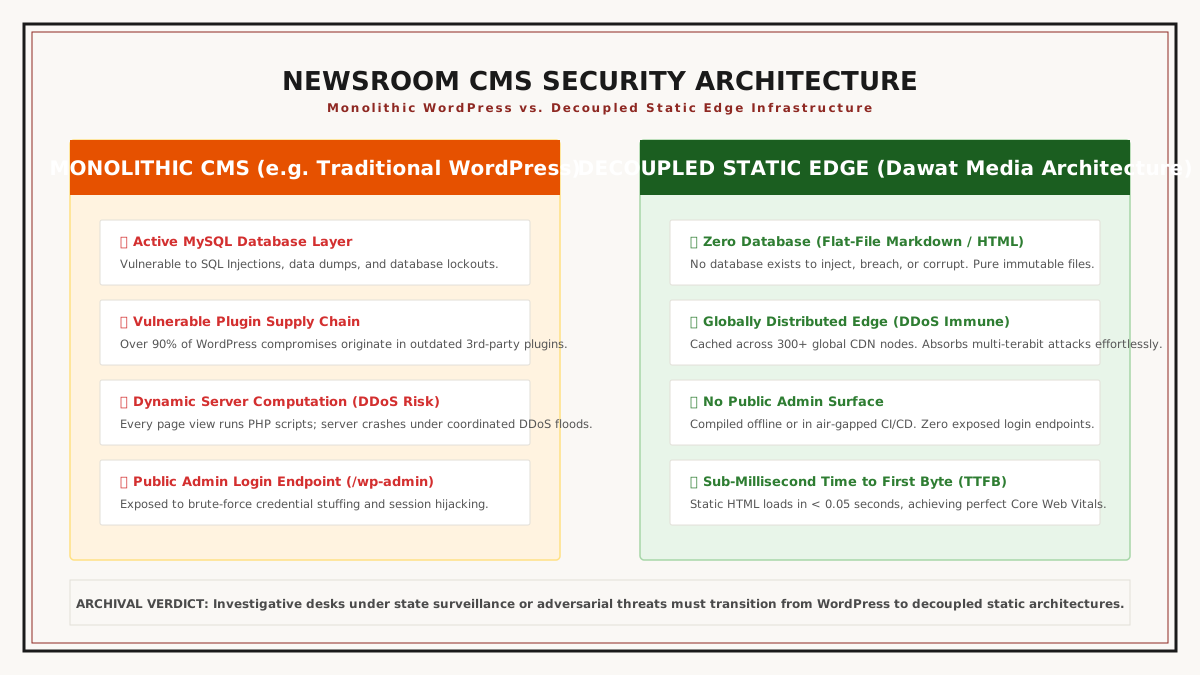
When an investigative publication prepares to publish an exposé documenting state corruption, illegal surveillance architectures, or financial crime, the technical threat model changes instantly. The danger is no longer merely theoretical; the moment the story breaks, the publication’s web infrastructure faces coordinated Distributed Denial of Service (DDoS) floods, database injection probes, and credential stuffing attacks designed to take the story offline.
For the vast majority of independent newsrooms operating on traditional, monolithic content management systems (most notably self-hosted WordPress), these attacks are frequently fatal. A server executing complex dynamic database queries collapses under modest traffic spikes, and unpatched third-party plugins grant adversaries root access to unreleased drafts and confidential source logs.
As detailed in our overarching Digital Security Blueprint for Journalists, defensive resilience requires eliminating systemic attack surfaces. This technical architecture guide explains why investigative publications must abandon monolithic database architectures in favor of decoupled, headless static edge infrastructure.
1. The Monolithic WordPress Dilemma: An Unmanageable Attack Surface
WordPress powers over 40% of the public web, a testament to its democratic accessibility. However, for an investigative newsroom subject to adversarial targeting, its traditional monolithic architecture is an operational hazard.
                      THE MONOLITHIC CMS EXPLOIT CHAIN

    Adversary / State Botnet               Monolithic Server (WordPress)
    ┌───────────────────────────┐         ┌───────────────────────────────────┐
    │ Layer 7 HTTP Flood (DDoS) │ ──────▶ │ PHP Engine runs script for every  │
    │ Automated Plugin Exploits │ ──────▶ │ visitor ──▶ Exhausts Server CPU   │
    │ SQL Injection Probes      │ ──────▶ │ MySQL Database query executes     │
    │ /wp-admin Credential Stuff│ ──────▶ │ Exposed Admin Login Endpoint      │
    └───────────────────────────┘         └───────────────────────────────────┘
                                                            │
                                                            ▼
                                                 SERVER CRASH / DATA BREACH
The Inherent Vulnerabilities of Monolithic CMS:
- The Plugin Supply Chain: Over 90% of all recorded WordPress security breaches stem not from the core software, but from third-party plugins and themes. An investigative site running 30 plugins introduces 30 distinct attack vectors written by disparate developers who may abandon maintenance or sell their code to malicious actors.
- Dynamic Database Computation Overhead: In a traditional setup, every single visitor request triggers a cascade of server-side PHP scripts that query a MySQL database to assemble the page on the fly. When a story goes viral—or an adversary unleashes a 50,000 request-per-second Layer 7 HTTP flood—the database connection pool saturates within seconds, rendering the site completely unreachable.
- The Persistent Database Target: An active database contains user tables, password hashes, drafts of unreleased investigations, and subscriber email addresses. If an attacker discovers an SQL injection flaw, they extract the entire institutional record in a single command.
2. The Decoupled Static Edge Paradigm (Jamstack)
The modern standard for high-security investigative publishing decouples the content authoring process from the public delivery mechanism.
In a decoupled architecture: * Content is authored in plain text (Markdown) with structured YAML frontmatter. * A Static Site Generator (SSG)—such as Hugo, 11ty, or Dawat Free Media’s custom Python static engine—compiles the entire site offline in seconds, producing raw, immutable HTML, CSS, and JavaScript files. * These flat files are deployed to a global content delivery network (CDN) edge (such as Cloudflare Pages, Fastly, or AWS CloudFront).
                       THE DECOUPLED STATIC EDGE DEFENSE

    Adversary / 10 Gbps DDoS Flood                 Edge Network (300+ Global Data Centers)
    ┌────────────────────────────┐                ┌──────────────────────────────────────┐
    │ High-Volume Request Flood  │ ─────────────▶ │ Serves Pre-Compiled Static HTML File │
    │ SQL Injection Query        │ ─────────────▶ │ Zero PHP Engine / Zero Database      │
    │ Brute-Force Admin Login    │ ─────────────▶ │ 404: No Login Endpoint Exists        │
    └────────────────────────────┘                └──────────────────────────────────────┘
                                                                    │
                                                                    ▼
                                                       100% UPTIME & SUB-50MS TTFB
Why Static Edge Infrastructure is Immune to Common Exploits:
- Total Immunity to SQL Injections: Because there is no database running on the web server, an adversary has nothing to query, inject, or breach.
- Total DDoS Resilience: Serving flat static HTML files requires virtually zero server CPU computation. CDNs distribute files across hundreds of edge locations worldwide, absorbing multi-terabit volumetric DDoS attacks effortlessly without the core origin ever experiencing stress.
- Zero Exposed Admin Surface: There is no
/wp-adminlogin screen to brute-force. The authoring environment resides locally on encrypted journalist workstations or within an internal, air-gapped repository protected by hardware security keys. - Blazing Speed & Perfect Core Web Vitals: Static HTML pages load in less than 50 milliseconds globally, providing optimal reading experiences and maximum algorithmic favor in search engine rankings.
3. Practical Architecture: Building an Archival Engine
Dawat Free Media’s own operational infrastructure models this decoupled philosophy. Rather than managing complex database clusters, our publishing engine operates via a dedicated static compiler:
- Source Files in Pure Markdown: Every dispatch and monograph is stored as an immutable Markdown file with standardized frontmatter metadata.
- Rapid Python Build Pipeline: A single script parses content, generates high-contrast editorial layouts via Jinja2 templates, and validates sitemaps in under 600 milliseconds.
- Client-Side Interactive Sandboxes: When interactive functionality is required—such as the Digital Media Verification Navigator—it is engineered in pure client-side vanilla JavaScript. Calculations, EXIF inspections, and file hashing occur entirely within the reader’s local browser memory, requiring zero dynamic server infrastructure.
4. Newsroom Migration Blueprint: Moving from WordPress to Static
For publications seeking to transition from legacy WordPress to decoupled security, follow this phased migration framework:
┌────────────────────────────────────────────────────────────────────────┐
│                   THE 4-STAGE STATIC MIGRATION PIPELINE                │
├──────────────────────────────────┬─────────────────────────────────────┤
│ STAGE 1: EXPORT & SANITIZATION   │ STAGE 2: STATIC COMPILER SETUP      │
├──────────────────────────────────┼─────────────────────────────────────┤
│ • Export WordPress XML archive   │ • Select SSG: Hugo / 11ty / Python  │
│ • Convert HTML posts to clean    │ • Build semantic HTML5 templates    │
│   Markdown via `pandoc`          │ • Enforce accessible editorial type │
├──────────────────────────────────┼─────────────────────────────────────┤
│ STAGE 3: ASSET & REDIRECT AUDIT  │ STAGE 4: EDGE CDN DEPLOYMENT        │
├──────────────────────────────────┼─────────────────────────────────────┤
│ • Convert images to WebP (16:9)  │ • Deploy to Cloudflare Pages / Git  │
│ • Map historic URLs in clean     │ • Enforce strict HSTS / DNSSEC      │
│   `_redirects` rules to save SEO │ • Decommission old PHP/MySQL server │
└──────────────────────────────────┴─────────────────────────────────────┘
- URL Preservation: Never break historical backlinks. As demonstrated in our own
_redirectsconfiguration, preserve 20-year-old URL structures (from Wikipedia and academic citations) using clean 301 redirects mapped at the CDN edge. - Version Control with Git: Managing your publication through a Git repository creates an immutable, timestamped audit trail of every editorial modification, completely independent of volatile proprietary platforms.
Architecture Comparison Matrix
| Architectural Attribute | Monolithic WordPress | Headless WordPress + Next.js | Pure Static Edge (Jamstack) |
|---|---|---|---|
| SQL Injection Vulnerability | ⚠️ Severe Risk | ⚠️ Moderate Risk | ✅ Zero Risk (No DB) |
| DDoS Failure Rate | High (Server crashes) | Moderate (Edge caching helps) | ✅ Immune (Absorbed at Edge) |
| Time to First Byte (TTFB) | 350ms – 1,200ms | 150ms – 400ms | ✅ < 50ms Globally |
| Server Maintenance Overhead | Continuous patching | Node.js server maintenance | ✅ Zero (Serverless) |
| Monthly Hosting Cost | \$50 – \$500 / month | \$40 – \$200 / month | ✅ \$0 – \$20 / month |
Conclusion: Simplicity as Supreme Defense
In digital security, complexity is the enemy of safety. Every dynamic script, database query, and third-party plugin added to a publishing platform represents an open window for adversaries to exploit.
By stripping away dynamic server dependencies and embracing the timeless simplicity of decoupled, static edge publishing, independent newsrooms achieve both absolute technical resilience and lightning-fast reader performance. The voice of independent journalism remains permanent, immutable, and impossible to silence.
Compare creator publishing software in Substack vs. Ghost vs. Beehiiv, or review operational funding in The Grant Directory for Journalists.
Verify File Checksums & Audit Metadata Traces
Generate cryptographic SHA-256 integrity digests and inspect hidden container metadata to protect whistleblowers and ensure secure evidentiary chain-of-custody.
About the Contributor
The Dawat Media Economics & Sustainability Desk studies publishing technologies, independent newsroom balance sheets, and non-extractive revenue models.
Related Research & Dispatches
How to Verify if a Journal is Indexed in Scopus, Web of Science, or Predatory: The Forensic Scholarly Audit
A rigorous diagnostic procedure for verifying scholarly publication credentials, auditing ISSN registries, cro...

Diaspora Literature in the 21st Century: Exile, Memory, and Cultural Reclamation
An extensive critical examination of how writers in forced migration navigate the geography of memory, the rup...
The Importance of Tribal Structures and Pakhtunwali in Afghanistan
A scholarly treatise on customary Pakhtunwali jurisprudence, decentralized tribal cohesion, the mechanics of t...