Critical Themes in the Works of Khaled Hosseini: Kinship, Guilt, and the Afghan Diaspora
A definitive scholarly monograph examining fraternal betrayal, ethnic stratification, maternal resilience, and the diasporic burden of return across Khaled Hosseini’s major novels, incorporating Dr. Rahmat Rabi Zirakyar’s seminal critique on ethnic representation.
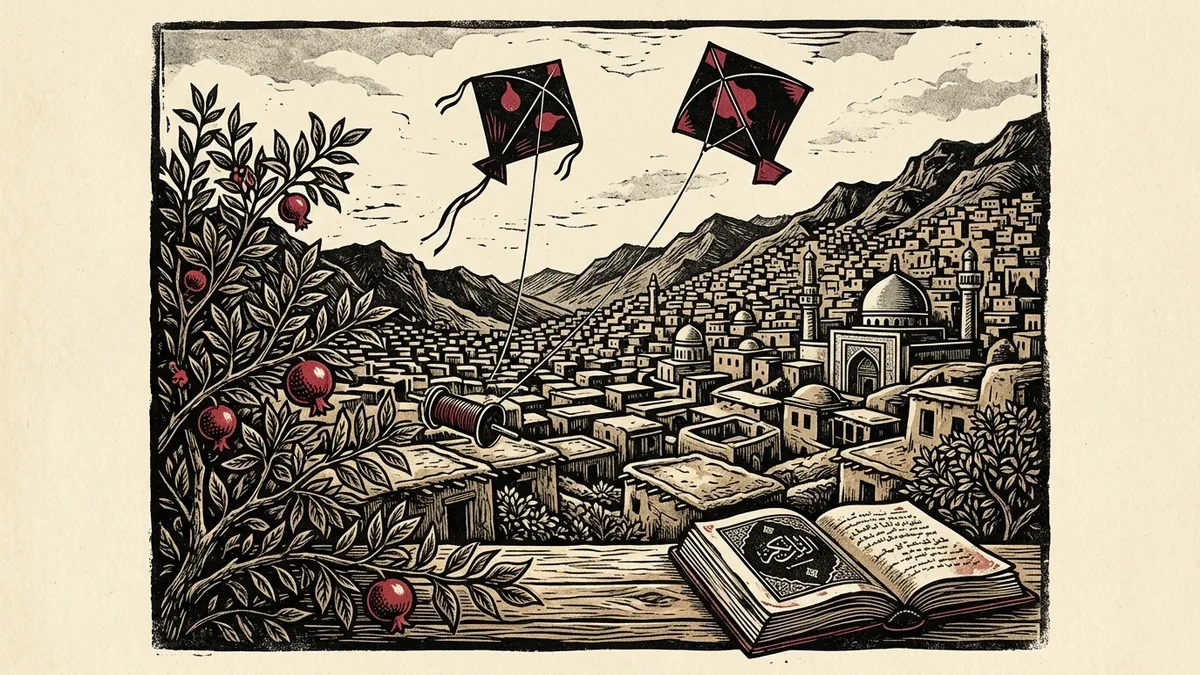
When Khaled Hosseini published The Kite Runner in 2003, global literature experienced a profound tectonic shift. For decades, the Western literary imagination had viewed Afghanistan through the reductive prism of imperial military interventions—from nineteenth-century British colonial chronicles to Cold War intelligence thrillers. Hosseini dismantled this external gaze by offering an intimate, visceral portrait of Afghan domesticity, fraternity, social hierarchy, and moral failing.
In the inaugural literary reviews published across Dawat Free Media’s archives between 2004 and 2009, our contributing scholars identified Hosseini not merely as a commercial bestseller, but as a defining architect of contemporary postcolonial diaspora fiction.
[!NOTE] Archival Record & Citation Provenance This monograph preserves, evaluates, and substantially expands upon the seminal December 2009 critical study, “A Critical Response to the Pashtun Bashing in The Kite Runner” by Dr. Rahmat Rabi Zirakyar, originally published by Dawat Independent Media Center (
dawatfreemedia.org/english/). It remains indexed in global academic bibliographies and Wikipedia’s author record on Khaled Hosseini as a primary critical inquiry into ethnic portrayal and narrative ethics.
As explored in our companion study on Diaspora Literature in the 21st Century, Hosseini’s oeuvre bridges classical Persian narrative archetypes with modern psychological realism. This comprehensive monograph delivers an exhaustive scholarly analysis of Hosseini’s literary universe, spanning The Kite Runner (2003), A Thousand Splendid Suns (2007), and And the Mountains Echoed (2013), alongside detailed character breakdowns, thematic study frameworks, and the critical sociopolitical debates surrounding ethnic representation in Afghan literature.
1. Fraternal Betrayal and the Albatross of Survivor Guilt
At the beating heart of The Kite Runner lies an ancient, biblically resonant moral rupture: the betrayal of a brother. The relationship between Amir, the privileged Sunni Pashtun son of an affluent merchant, and Hassan, the devoted Shia Hazara servant who shares his compound, mirrors the fractured social contract of pre-revolutionary Afghanistan.
                      THE PARALLEL TRAJECTORIES OF GUILT

    The Childhood Sin (Kabul, 1975)          The Exiled Life (Fremont, 1980s)
    ┌─────────────────────────────┐          ┌─────────────────────────────┐
    │ Alleyway Cowardice          │          │ American Material Success   │
    │ Abandonment of Hassan       │ ───────▶ │ Haunting Unresolved Shame   │
    │ Complicity with Assef       │          │ The Sanitized Stanford Life │
    └─────────────────────────────┘          └─────────────────────────────┘
                                                   │
                                                   ▼ (The Moral Summons)
                                    "There is a way to be good again."
                                    (The Dangerous Return to Kabul)
Amir’s cowardice during the winter 1975 kite tournament alleyway assault is not an isolated adolescent failure; it is an allegorical representation of the Afghan ruling elite’s historical complicity in the marginalization of minority communities. Amir’s subsequent flight to Pakistan and California represents the luxury of diaspora escape: the affluent intellectual escapes the physical destruction of the Soviet-Afghan war, while the disenfranchised servant class remains trapped behind to suffer the full terror of the Taliban’s ascendancy.
In California, the flea market in San Jose serves as a poignant physical microcosm of this exiled social order: retired generals who once commanded army divisions now sell second-hand goods, aristocratic women cling to rigid traditional courtship etiquette (k خواستگاری), and the traumas of the homeland are politely submerged beneath suburban assimilation.
Yet, as Rahim Khan’s famous telephone summons makes clear—“There is a way to be good again”—true redemption requires relinquishing the safety of diaspora exile. Amir must re-enter the nightmare landscape of Taliban-controlled Kabul to rescue Hassan’s orphaned son, Sohrab, physically absorbing the violent punishment he cowardly avoided three decades earlier.
2. The Pashtun-Bashing Controversy: Evaluating Dr. Rahmat Rabi Zirakyar’s Critique
A foundational dimension of Hosseini’s critical reception—and the core subject of Dr. Rahmat Rabi Zirakyar’s 2009 monograph published by Dawat Free Media—is the sociopolitical question of ethnic representation:
Zirakyar’s Sociological Inquiry
Dr. Zirakyar argued that while The Kite Runner succeeded brilliantly as an emotional narrative of filial guilt, its sociopolitical subtext ran the risk of codifying a reductive, bifurcated view of Afghan society for an uninitiated Western readership: * The Antagonist Archetype: The primary villain, Assef, is depicted as half-German and fanatically Pashtun, espousing Hitlerian racial purity and later re-emerging as a sadistic Taliban executioner. Dr. Zirakyar cautioned that attributing the darkest excesses of Afghan civil conflict exclusively to Pashtun ethnocentric zealotry risked creating a collective indictment, erasing centuries of nuanced, cross-ethnic coexistence and shared tribal customs. * The Passive Victim Archetype: Hassan and Ali are portrayed with saintly, almost supernatural docility and self-sacrificing subservience. Zirakyar observed that such hyper-idealized depictions, while evoking reader sympathy, historically risk denying minority subjects complex agency, reducing them to passive narrative instruments for the moral development and eventual redemption of the privileged protagonist. * Western Consumption of Post-9/11 Afghan Reality: Published in 2003 at the apex of the War on Terror, The Kite Runner became for millions of international readers their sole ethnographic window into Afghanistan. Zirakyar warned that when Western policymakers and reading publics mistake fictional dramatizations for definitive anthropological field manuals, the intricate clan alliances, local grievances, and colonial histories of the region become dangerously obscured.
Hosseini’s Literary Defense and Narrative Intent
Literary theorists and Hosseini himself offered a counter-evaluation to Zirakyar’s critique: 1. Psychological Particularity vs. Anthropological Presumption: Hosseini maintained that The Kite Runner was written as an intimate story of two specific boys and one specific household, rather than a sociological survey of Afghan demographic groups. 2. Moral Nuance Among Pashtun Figures: Characters such as Rahim Khan (who represents the novel’s unwavering moral conscience) and Baba (who risks his life on the road to Jalalabad to defend a Hazara woman from a Soviet soldier) disprove the claim of uniform demonization. Baba’s moral framework is complex: he commits a grave betrayal by fathering Hassan out of wedlock, yet spends his life building orphanages and feeding the impoverished to atone for that hidden guilt. 3. The Catalyst for Truth-Telling: By exposing the historical persecution of Hazaras under 19th-century monarchs like Abdur Rahman Khan and during the 1998 Taliban massacres in Mazar-i-Sharif, Hosseini broke an entrenched cultural silence, forcing both the diaspora and the global community to confront historical atrocities.
Ultimately, Dr. Zirakyar’s critical contribution remains essential because it established the standard for ethical accountability in diaspora literature: reminding authors that in times of war, literary tropes carry immense real-world political resonance.
3. Structural Ethnic Hierarchies: The Hazara Condition
Hosseini achieved an unprecedented feat in international publishing: he forced global readers to confront the historical persecution of the Hazara people.
Throughout Afghan historiography, the Hazaras—a distinct Persian-speaking community predominantly of Shia faith—endured systematic dispossession, slavery, and state-sanctioned pogroms under Emir Abdur Rahman Khan in the late nineteenth century. In modern Kabul, this structural hierarchy manifested as domestic subjugation: * Hassan and his father Ali live in a modest mud hut at the rear of Baba’s luxurious estate, occupying a distinct spatial underclass. * When the neighborhood bully Assef taunts Hassan, his rhetoric is overtly racialized, citing historical school texts that declare Hazaras “foreign interlopers” on Pashtun soil. * The subsequent historical climax—the 1998 Taliban massacre of Hazaras in Mazar-i-Sharif, in which Hassan and his wife Farzana are summarily murdered—grounds Hosseini’s novel in unsparing, verified historical documentation.
By revealing that Hassan is in fact Amir’s biological half-brother (the secret son of Baba and Sanaubar), Hosseini converts social inequality into a direct blood crime: the privileged class has not merely oppressed a distinct caste; it has disowned and abandoned its own kin.
4. Comprehensive Character Dossier & Psychological Breakdown
| Character | Social Stratum & Ethnicity | Psychological Archetype | Key Narrative Arc & Symbolic Role |
|---|---|---|---|
| Amir | Sunni Pashtun; Elite merchant class | The Guilt-Ridden Seeker | Paralyzed by childhood cowardice and a desperate yearning for Baba’s approval. His flight to California isolates his guilt; his return to Kabul to save Sohrab enacts true moral redemption. |
| Hassan | Shia Hazara; Servant caste | The Sacrificial Lamb | Characterized by unconditional fidelity and moral purity. His phrase “For you, a thousand times over” represents the pinnacle of selfless love and tragic historical vulnerability. |
| Baba | Sunni Pashtun; Aristocratic patriarch | The Flawed Titan | Known as “Toophan Agha” (Mr. Hurricane). Outwardly hyper-masculine, generous, and courageous, but burdened by the secret sin of fathering Hassan. Dies in Fremont with his pride intact. |
| Rahim Khan | Sunni Pashtun; Intellectual partner | The Moral Conscience | The surrogate father who nurtures Amir’s writing and recognizes both boys’ shared paternity. Utters the novel’s core thesis: “There is a way to be good again.” |
| Assef | Pashtun / German; Fascist militant | The Sociopathic Oppressor | The embodiment of predatory sadism and ethnic supremacy. Transitions seamlessly from brass-knuckled neighborhood tormentor to high-ranking Taliban official. |
| Sohrab | Shia Hazara; Orphaned child | The Wounded Heir | Inherits Hassan’s expert slingshot prowess and physical beauty. Subjected to horrific abuse under Assef, his eventual survival and fleeting smile at the San Francisco kite contest signal generational healing. |
| Ali | Shia Hazara; Devoted steward | The Stoic Patriarch | Stricken with polio and facial paralysis, Ali endures cruel taunts with extraordinary dignity. He proves to be a truer father to Hassan than Baba ever was. |
| Soraya | Sunni Pashtun; Diaspora daughter | The Redeemed Partner | Amir’s wife in California. Confronts rigid gender double-standards with candid courage, sharing her past openly where Amir continues to conceal his own. |
5. Feminine Solidarity under Theocratic Domesticity: A Thousand Splendid Suns
If The Kite Runner is an investigation of fathers and sons, A Thousand Splendid Suns (2007) is a monumental tribute to the resilience of Afghan women under intersecting domestic and political theocracies.
The novel contrasts two women from radically divergent social backgrounds whose lives converge through war:
┌────────────────────────────────────────────────────────────────────────┐
│             FEMININE CONVERGENCE: MARIAM AND LAILA                     │
├──────────────────────────────────┬─────────────────────────────────────┤
│ MARIAM (The Illegitimate Outcast) │ LAILA (The Modern Kabul Intellectual│
├──────────────────────────────────┼─────────────────────────────────────┤
│ • Born a *harami* (shameful child│ • Father was an educated schoolmarm │
│ • Illiterate, rural Herat exile  │ • Raised to pursue university degree│
│ • Forced child marriage to Rasheed│ • Rocket blast destroys entire family│
│ • Endures decades of battery     │ • Trapped into polygynous marriage  │
└──────────────────┬───────────────┴──────────────────┬──────────────────┘
                   │                                  │
                   └────────────────▶ ◀───────────────┘
                                      │
                                      ▼
             [Female Solidarity Defeating Domestic Tyranny]
             Mariam sacrifices her life so Laila and children can flee.
In Rasheed’s suffocating Kabul compound, Hosseini captures the micro-mechanics of domestic terror. Rasheed enforces total isolation, physical beatings, and forced burqa compliance, using the external rise of the Taliban to legitimize his domestic brutality.
Initially, Mariam views the young, pregnant Laila with cold suspicion as a rival for limited household security. However, as the shared horror of their abuse escalates, their relationship transforms into fierce maternal solidarity. Mariam’s ultimate act—striking Rasheed down with a shovel to save Laila’s life, and walking serenely to her execution in the Ghazi Stadium—transcends victimhood:
“She thought of her entry into this world, the harami child of a lowly villager… a weed. Yet she was leaving the world as a woman who had loved and been loved back.”
Hosseini establishes that in an authoritarian society where women are stripped of legal standing, public voice, and physical autonomy, mutual solidarity and self-sacrifice become the highest forms of political resistance.
6. Narrative Architecture: Melodrama and Classical Persian Archetypes
Western literary critics occasionally criticized Hosseini for relying on cinematic coincidences and melodramatic conventions (e.g., Amir discovering that the Taliban official holding Sohrab is his childhood tormentor Assef).
However, this criticism reflects a Western modernist bias that fails to recognize the classical traditions of Persian storytelling. As explored in our study on The Politics of Translation, Hosseini structures his plots around the epic paradigms of Ferdowsi’s Shahnameh (The Book of Kings): * The tragic myth of Rostam and Sohrab—the father who unknowingly slays his own son in single combat—haunts both The Kite Runner and And the Mountains Echoed. * Hosseini repurposes this myth for the modern diaspora: Baba’s moral failure destroys his noble son Hassan, while Amir must risk death to rescue Hassan’s namesake, reversing the ancient cycle of filial slaughter.
7. Comparative Monograph Matrix: Hosseini’s Core Works
| Work | Primary Focus | Central Motif | Historical Backdrop | Key Thematic Dialogue |
|---|---|---|---|---|
| The Kite Runner (2003) | Filial guilt, Hazara oppression, exile, redemption | The Flying Kite & The Pomegranate Tree | Pre-revolutionary Kabul (1975) to Taliban era (2001) | “There is a way to be good again.” |
| A Thousand Splendid Suns (2007) | Female resilience, domestic violence, matriarchal bonding | The Burqa & The Ghazi Stadium Execution | Mujahideen civil war through Taliban theocracy | “One could not count the moons that shimmer on her roofs, or the thousand splendid suns that hide behind her walls.” |
| And the Mountains Echoed (2013) | Generational dispersion, sibling severance, diaspora memory | The Village of Shadbagh & Oak Trees | Global diaspora spanning Paris, Tinos, California, and Kabul | “A finger had to be cut, to save the hand.” |
8. Essential Quotes and Contextual Analysis
1. “For you, a thousand times over.”
- Speaker: Hassan (to Amir, Chapter 7) and later Amir (to Sohrab, Chapter 25).
- Context & Significance: In childhood, Hassan utters this phrase with radiant joy before running the blue tournament kite for Amir. It encapsulates total, unreserved love and loyalty. When Amir repeats the exact phrase to Sohrab in the closing scene in Golden Gate Park, the linguistic symmetry marks the closure of Amir’s thirty-year cycle of guilt: he has transitioned from the entitled receiver of sacrifice to the active, humble server of Hassan’s child.
2. “There is a way to be good again.”
- Speaker: Rahim Khan (via telephone from Peshawar, Chapter 1).
- Context & Significance: This phrase serves as the catalytic incipit of the entire novel. Rahim Khan knows of Amir’s alleyway cowardice, Baba’s paternity secret, and Sohrab’s plight. By framing redemption not as an impossibility, but as an arduous, deliberate choice, Hosseini establishes that moral status is determined not by past sins, but by the willingness to endure suffering for the truth.
3. “There is only one sin, only one. And that is theft. When you tell a lie, you steal someone’s right to the truth.”
- Speaker: Baba (Chapter 3).
- Context & Significance: Baba’s idiosyncratic moral philosophy dismisses orthodox religious rituals in favor of a universal ethic based on theft. This assertion becomes bitterly ironic when Amir discovers Baba’s true relationship with Hassan: Baba stole Ali’s honor, Hassan’s identity, and Amir’s knowledge of his brother. Baba’s philanthropy was his private labor of atonement.
9. Frequently Asked Questions (FAQ)
What is the central message of The Kite Runner?
The novel argues that true redemption cannot be achieved through passive regret or geographical escape; it requires confronting past cowardice, speaking painful truths, and actively sacrificing personal safety to rectify inherited injustices.
Why did Dr. Rahmat Rabi Zirakyar criticize The Kite Runner in 2009?
Dr. Zirakyar, writing for Dawat Independent Media Center, argued that Hosseini’s depiction of the Pashtun-Hazara dynamic risked reinforcing simplistic stereotypes for Western audiences, presenting Pashtuns as monolithic oppressors and Hazaras as passively angelic victims, while overlooking historical nuances of Afghan coexistence.
What does the pomegranate tree symbolize?
Carved with the inscription “Amir and Hassan, the sultans of Kabul,” the pomegranate tree represents the boys’ childhood innocence and mutual bond. When Amir pelted Hassan with pomegranates to provoke punishment, the tree ceased bearing fruit, symbolizing spiritual death. Decades later, when Amir returns to Kabul, the tree is withered and barren, reflecting the devastation of the country and their lost youth.
How does A Thousand Splendid Suns contrast with The Kite Runner?
While The Kite Runner centers on male relationships, father-son validation, and guilt, A Thousand Splendid Suns focuses on female bonding, systemic domestic oppression under patriarchal and theocratic rule, and the heroic sacrifices Afghan women make to protect each other.
Conclusion: The Enduring Legacy of Hosseini’s Prose
Khaled Hosseini transformed the landscape of world literature by demonstrating that the stories of displaced, traumatized peoples belong at the center of the global human story. By refusing to sanitize the darker chapters of Afghan ethnic stratification or female oppression, while maintaining profound reverence for regional poetic hospitality and kinship, his work remains a foundational touchstone for diaspora literature worldwide.
Through the critical debates sparked by scholars like Dr. Rahmat Rabi Zirakyar in the pages of Dawat Free Media, we are reminded that literature is at its most powerful when it provokes vigorous dialogue about history, justice, and the ethics of cultural storytelling.
For a wider theoretical analysis of exile and memory, read our pillar essay Diaspora Literature in the 21st Century, or explore our historical monograph on Tribal Structures and Pakhtunwali in Afghanistan.
Frequently Asked Verification Questions
Key technical principles, error traps, and diagnostic standards for investigative researchers.
What is the central moral theme of The Kite Runner?
Why is Dr. Rahmat Rabi Zirakyar's critique of The Kite Runner cited by scholars and Wikipedia?
What does the flying kite symbolize in Khaled Hosseini's novel?
How does A Thousand Splendid Suns contrast with The Kite Runner?
Historical Monographic Archive & Verification
Dawat Free Media preserves historical Afghan literature, cultural memory, and diaspora research alongside our zero-upload digital forensic tools.
About the Contributor
Dr. Rahmat Rabi Zirakyar was an Afghan scholar, political scientist, and archival contributor to Dawat Free Media. His foundational 2009 critique of *The Kite Runner* is indexed across international academic literature and Wikipedia's reference archive on Khaled Hosseini.
Related Research & Dispatches

How to Verify if a Journal is Indexed in Scopus, Web of Science, or Predatory: The Forensic Scholarly Audit
A rigorous diagnostic procedure for verifying scholarly publication credentials, auditing ISSN registries, cro...
Diaspora Literature in the 21st Century: Exile, Memory, and Cultural Reclamation
An extensive critical examination of how writers in forced migration navigate the geography of memory, the rup...
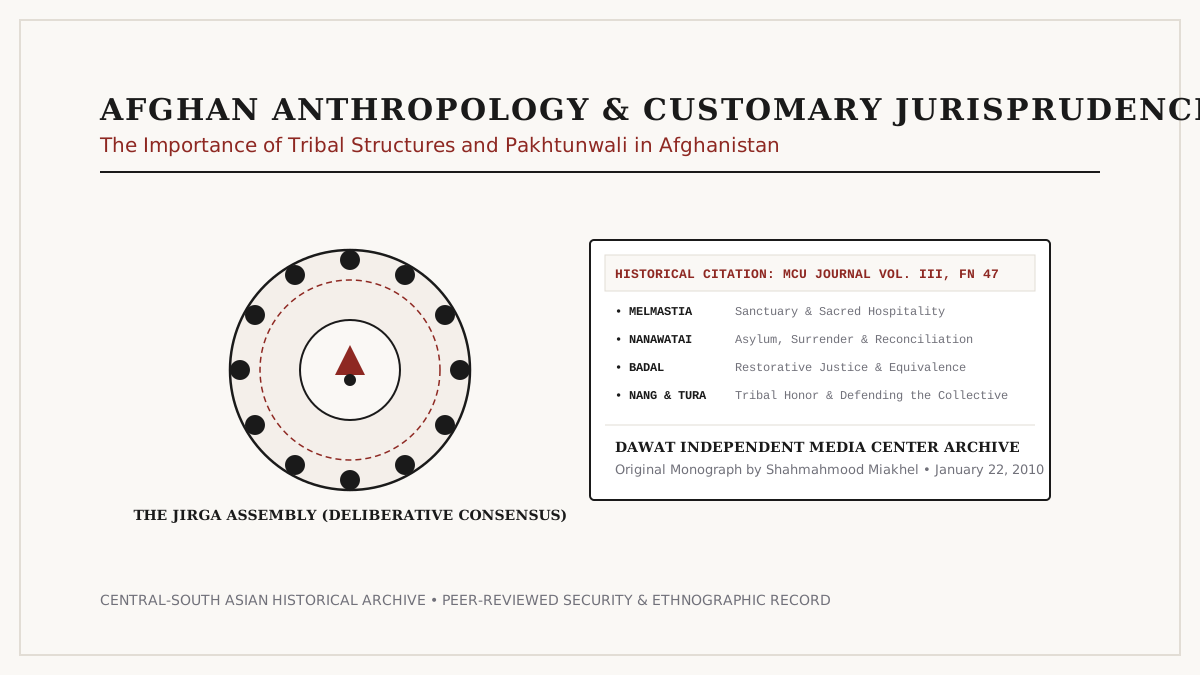
The Importance of Tribal Structures and Pakhtunwali in Afghanistan
A scholarly treatise on customary Pakhtunwali jurisprudence, decentralized tribal cohesion, the mechanics of t...