Diaspora Literature in the 21st Century: Exile, Memory, and Cultural Reclamation
An extensive critical examination of how writers in forced migration navigate the geography of memory, the rupture of linguistic displacement, and the reclamation of cultural identity.
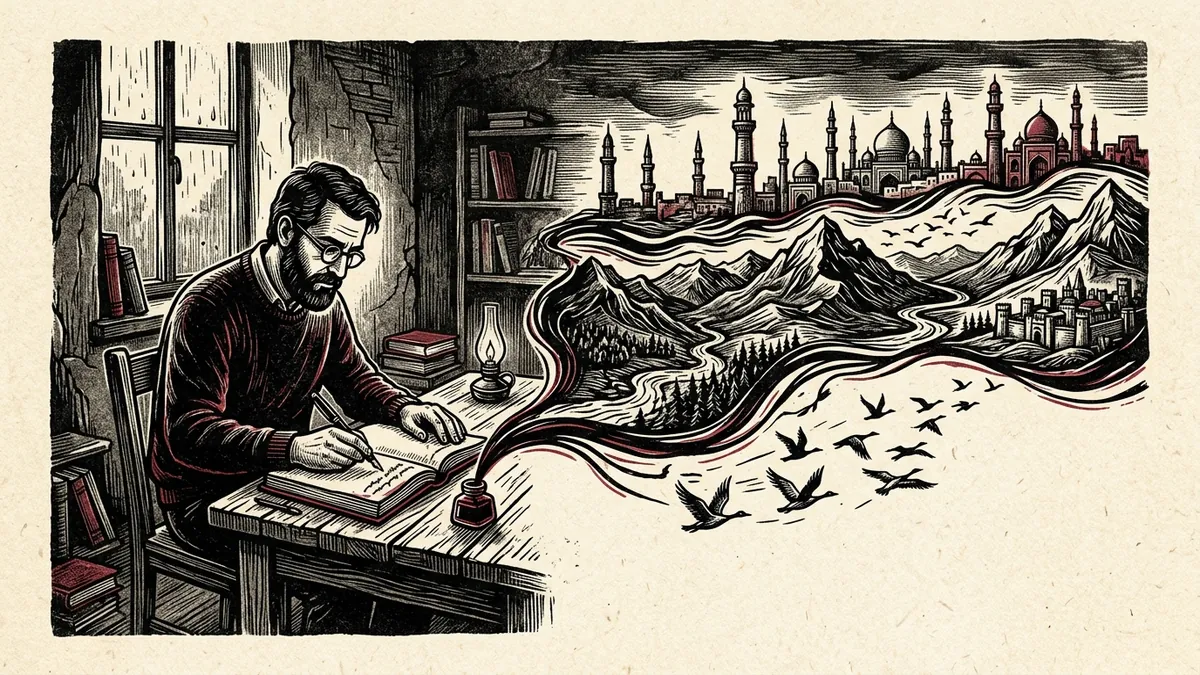
To write in exile is to exist in a permanent double-exposure. The writer looks out upon the grey brick tenements of Frankfurt, the damp suburbs of Oslo, or the sun-bleached avenues of Fremont, California, yet beneath the visible surface of the adopted city lies the phantom architecture of a lost homeland. Streets that have been leveled by artillery, teahouses that have vanished beneath decades of ideological upheaval, and family gardens that survive only in the fragile neural circuitry of childhood recollection are summoned onto the blank page.
As Edward Said famously observed in Reflections on Exile, exile is “strangely compelling to think about but terrible to experience. It is the unhealable rift forced between a human being and a native place, between the self and its true home: its essential sadness can never be surmounted.” Yet, paradoxically, this existential wound has served as one of the most generative engines of twentieth- and twenty-first-century world literature.
When Dawat Free Media established its editorial imprint in 2004, the Central and South Asian diaspora was undergoing an unprecedented literary dispersion. Fleeing successive waves of geopolitical proxy conflict, totalitarian theocracy, and institutional collapse, scholars, poets, and prose writers carried their regional literary heritage across European and North American borders. Over the past two decades, our archives have documented this migration of letters—examining how writers transform the physical trauma of dislocation into enduring works of cultural reclamation.
1. The Anatomy of Rupture: Physical Loss vs. Imaginative Geography
The initial condition of diasporic writing is physical and institutional dispossession. In the homeland, a writer is supported (or contested) by national academies, university faculties, regional presses, and an organic reading public that shares common cultural idioms and historical touchstones.
In forced migration, that literary ecosystem dissolves overnight: * The writer is stripped of their institutional standing, frequently reduced in the host nation to the administrative classification of “asylum seeker” or “displaced person.” * Physical access to regional manuscript libraries, ancestral archives, and living oral traditions is permanently severed. * The physical topography of the homeland undergoes rapid, catastrophic alteration. The Kabul or Herat of 1975 does not exist in 2026; it exists only as an “imaginary homeland” (to borrow Salman Rushdie’s seminal formulation)—an interior territory reconstructed through shards of selective memory, nostalgic longing, and literary invention.
                         THE DIASPORIC LITERARY AXIS

    Physical Reality of Exile                Imaginative Reconstruction
    ┌─────────────────────────┐              ┌─────────────────────────┐
    │ Western Host Society    │              │ Vanished Native Space   │
    │ Linguistic Alienation   │ ◀──────────▶ │ Reconstructed Memory    │
    │ Administrative Status   │   (The Pen)  │ Unresolved Kinship Debt │
    └─────────────────────────┘              └─────────────────────────┘
The diasporic novel, therefore, is rarely a simple act of documentary recording. It is an act of defiant architectural resurrection. The exiled author builds a paper city that can never be seized, partitioned, or placed under military curfews.
2. The Khaled Hosseini Watershed: From Regional Trauma to Global Consciousness
The emergence of contemporary Afghan diaspora fiction on the global stage was catalyzed indelibly by the phenomenal international reception of Khaled Hosseini’s The Kite Runner (2003) and A Thousand Splendid Suns (2007).
Prior to Hosseini, Western literary perceptions of Afghanistan were largely mediated through orientalist nineteenth-century colonial memoirs, Cold War espionage thrillers, or clinical geopolitical policy monographs. Hosseini achieved what political journalism could not: he humanized the complex moral, ethnic, and familial fault lines of modern Afghan society for tens of millions of global readers.
In our dedicated critical study—Critical Themes in the Works of Khaled Hosseini: Kinship, Guilt, and the Afghan Diaspora—we explore the deeper scholarly currents of Hosseini’s oeuvre: 1. The Burden of Survivor Guilt: Amir’s flight to California in The Kite Runner embodies the psychological agony of the educated elite who escaped physical annihilation while lower-caste and marginalized brethren bore the full brunt of violence. 2. Ethnic Stratification and Moral Complicity: The fractured brotherhood between Pashtun and Hazara characters serves as a piercing interrogation of regional social hierarchies. 3. Female Solidarity and Theocratic Subjugation: A Thousand Splendid Suns models how maternal devotion and feminine solidarity subvert authoritarian patriarchal regimes from within domestic sanctuaries.
Hosseini proved that writing in the adopted tongue (English) while retaining the narrative soul of Persian (Farsi-Dari) storytelling traditions could awaken the conscience of world literature without compromising emotional authenticity.
3. The Linguistic Dislocation: The Dilemma of the Mother Tongue
Every diaspora author confronts an excruciating linguistic crossroads: In what language shall the story be told?
                          THE LINGUISTIC CROSSROADS

                 ┌───────────────────────────────────────┐
                 │     The Exiled Non-Western Writer     │
                 └───────────────────┬───────────────────┘
                                     │
         ┌───────────────────────────┴───────────────────────────┐
         ▼                                                       ▼
[Write in Adopted Tongue (English/French)]        [Write in Mother Tongue (Dari/Pashto)]
 • Reaches global audiences & publishers           • Preserves syntactic cadence & idiom
 • Risks exoticizing or flattening cultural nuance • Confined to fragmented diaspora circles
 • Requires constant interior translation          • Faces vanishing commercial distribution
Writing in the adopted language of the host nation (English, French, German, Norwegian) grants immediate access to international publishing houses, academic recognition, and broad translation networks. However, this transition comes at an immense cultural cost: * Classical metaphors rooted in Sufi mysticism, regional folk proverbs, and intricate honor codes (Pashtunwali) resist direct Anglo-American equivalence. * The author risks slipping into the role of a “native informant,” forced to constantly explain, gloss, and italicize non-Western cultural practices for an uninformed foreign gaze.
Conversely, writing in the mother tongue (Persian, Pashto, Uzbek) preserves the sacred rhythmic architecture of regional speech, yet condemns the writer to small, self-funded diaspora print runs distributed through cultural associations in Oslo or community bookstalls in London.
In our companion scholarly analysis—The Politics of Translation: Preserving Cultural Nuance in Non-Western Prose—we explore how innovative contemporary translators resist reductive homogenization by deploying Venuti’s concept of “foreignizing translation,” forcing the dominant language to expand and bend around the authentic syntactic cadence of the original tongue.
4. Recovering the Submerged Voice: Orality and Women’s Folk Epics
Diaspora literature cannot be evaluated solely through published, spine-bound Western novels. A profound portion of regional cultural memory exists beyond the written word, preserved in the oral traditions of non-literate communities and marginalized women.
Nowhere is this cultural vitality more striking than in the Pashto Landay—a minimalist, two-line folk distich with nine syllables in the first line and thirteen in the second. Traditionally composed and circulated anonymously by women around communal water wells, marriage gatherings, and refugee border camps, the Landay represents one of the most subversive poetic traditions in global letters:
“My love, you did not fall on the battlefield,
Now I must lower my eyes whenever brave men pass.”
The Landay captures what formal state histories omit: female desire, rage against forced domesticity, bitter mockery of religious hypocrisy, and the despair of wartime displacement.
As documented in our archival monograph—Vanishing Folk Traditions and the Preservation of Oral Literature in Central-South Asia—the digitization and preservation of these oral forms is an urgent cultural imperative before physical dispersal and modern commercial media homogenize them out of living memory.
5. The Archival Mandate: Resisting Algorithmic Amnesia
In an internet ecosystem dominated by volatile social feeds and ephemeral click-driven commentary, independent research archives serve as civilization’s institutional memory banks.
Commercial publishing conglomerates pursue short-term literary trends, celebrating diaspora voices during moments of acute military intervention, only to abandon them when global headlines shift to new geopolitical theaters. When independent journals fold, twenty years of essays, author monographs, and cultural critiques vanish behind broken domain links and proprietary paywalls.
Dawat Free Media’s twenty-two-year archival trajectory demonstrates that open-access preservation is an act of cultural resistance: * By permanently maintaining scholarly evaluations of world literature on static, edge-distributed infrastructure, we guarantee that the creative outputs of displaced peoples remain accessible to university researchers, future diaspora generations, and international scholars worldwide. * By linking our literary studies with rigorous open-source investigative methodologies and digital rights advocacy, we affirm that the defense of a free press and the preservation of humanistic culture are inextricably bound.
The Core Pillars of Diaspora Literary Analysis
| Critical Axis | Primary Theoretical Focus | Exemplary Works & Traditions |
|---|---|---|
| Topography of Exile | Reconstructing physical homelands from nostalgic memory shards | Hosseini’s The Kite Runner, Rushdie’s Imaginary Homelands |
| Subversive Orality | Anonymous female folk verse resisting patriarchal censorship | The Pashto Landay distich traditions |
| Linguistic Hegemony | Resisting cultural flattening in Anglo-American translation | Venuti’s Foreignization, Spivak’s Politics of Translation |
| Generational Hybridity | Negotiating second-generation identity in Western metropolitan hubs | Contemporary diaspora memoirs in Oslo, Frankfurt, and Fremont |
Conclusion: The Unconquered Word
Dictatorships and occupying armies can burn printing presses, ban books, and force poets into remote foreign exile. But as the rich tapestry of twenty-first-century diaspora literature demonstrates, they cannot confiscate the imagination. Wherever an exiled writer uncaps a fountain pen or boots a laptop in a cold northern flat, the vanished streets of the homeland rise again, immortalized in language that refuses to perish.
Explore our specialized author studies in Critical Themes in the Works of Khaled Hosseini, or examine our language preservation work in The Politics of Translation.
Put This Methodology Into Practice
Test these forensic workflows directly inside our client-side verification engine. Inspect EXIF headers in memory, calculate cryptographic file fingerprints, and run automated error level analysis with zero data leaving your device.
Launch Digital Verification Navigator →About the Contributor
Dr. Rahmat Rabi Qazi is a literary historian, translator, and senior archival contributor to Dawat Free Media, specializing in Central-South Asian diaspora letters and postcolonial prose.