How to Tell if an Image is AI-Generated: 7 Diagnostic Tests for Midjourney, DALL-E, and Flux
A forensic methodology for identifying synthetic images, detecting diffusion model artifacts, analyzing frequency domain anomalies, and verifying photographic authenticity using client-side Error Level Analysis (ELA).
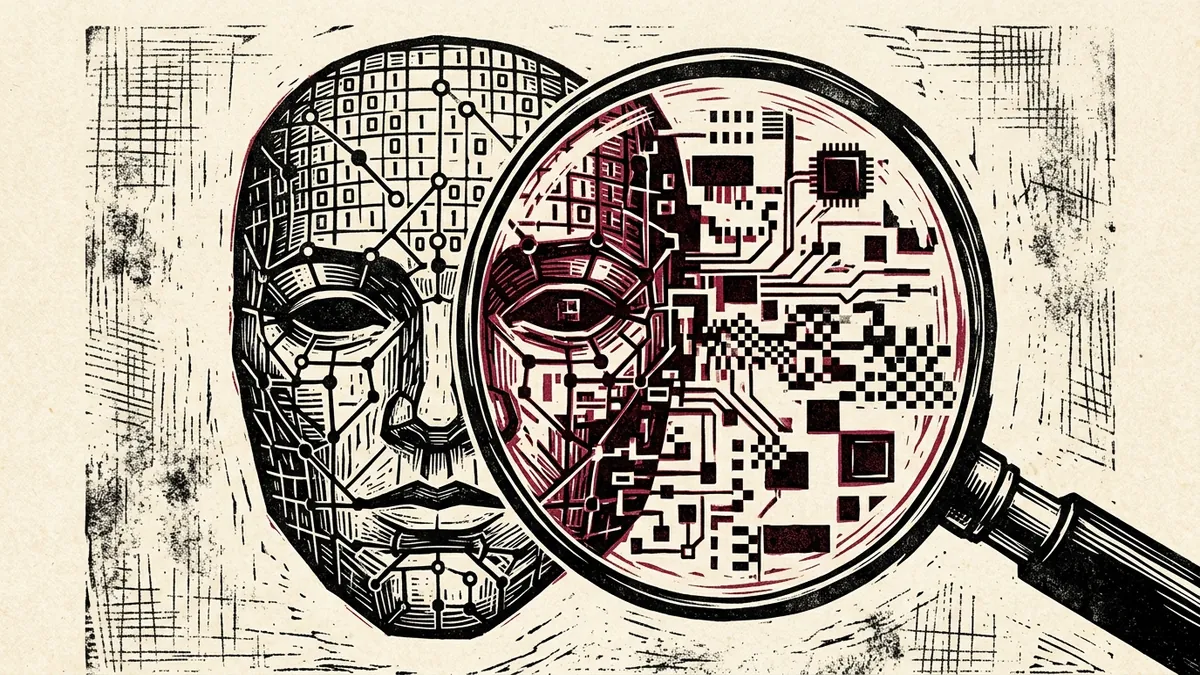
The rapid proliferation of state-of-the-art latent diffusion models—including Midjourney v6, OpenAI’s DALL-E 3, Stable Diffusion XL, and Black Forest Labs’ Flux—has radically degraded public trust in visual evidence. Synthetic photorealistic imagery is now routinely deployed in election interference, financial stock market manipulation, and wartime propaganda.
While early AI models were notorious for rendering mangled hands with seven fingers or melted facial features, current frontier generators produce skin pores, subsurface light scattering, and intricate textile textures that effortlessly deceive the naked eye.
However, generative models do not capture light through physical glass lenses onto silicon sensors; they statistically predict pixel values based on learned probability distributions. This fundamental architectural difference leaves indelible mathematical and physical artifacts that human forensic investigators can reliably identify.
Detect Image Splicing & AI Manipulation
Run client-side Error Level Analysis (ELA), inspect luminance gradient directional vectors, and test suspected imagery in private browser memory.
Launch Image Forensics SuiteThe 7 Diagnostic Tests for AI-Generated Imagery
┌────────────────────────────────────────────────────────────────────────┐
│                   THE 7 SYNTHETIC FORENSIC DIAGNOSTIC TESTS            │
├────────────────────┬────────────────────┬──────────────────────────────┤
│ 1. PUPIL REFLECTION│ 2. ELA COMPRESSION │ 3. HIGH-FREQUENCY RESIDUALS  │
│ Corneal catchlights│ Uniform error level│ Unnatural noise distribution │
│ mismatch across eyes. across entire scene. across color channels.      │
├────────────────────┼────────────────────┼──────────────────────────────┤
│ 4. TEXT GLYPHS     │ 5. EAR ARCHITECTURE│ 6. FIBER & JEWELRY LOGIC     │
│ Pseudo-alphabetic  │ Asymmetrical tragus│ Necklaces fading into skin;  │
│ alien typography.  │ and lobule folds.  │ eyewear melting into temples.│
├────────────────────┼────────────────────┼──────────────────────────────┤
│ 7. LIGHT COHERENCE │                    │                              │
│ Shadows projecting │                    │                              │
│ toward light source!                    │                              │
└─────────────────────────────────────────┴──────────────────────────────┘
Test 1: Corneal Light Reflection (The Catchlight Test)
In a real photograph of a human subject, the cornea of the eye acts as a spherical mirror. The catchlight (the bright reflection of the light source, window, or flash) must be mathematically identical in both eyes: * In synthetic imagery, diffusion models render each eye as an independent cluster of probabilities. * The Glitch: Zoom into both pupils at 400%. If the left eye reflects a square window while the right eye reflects a circular umbrella flash, or if the reflection angle does not align with the subject’s gaze, the image is synthetic. * Pupil Shape: Real human pupils are near-perfect circles. Diffusion models frequently produce oblong, teardrop, or irregularly notched pupil perimeters.
Test 2: Error Level Analysis (ELA) Uniformity
Error Level Analysis works by measuring the compression differences across an image file. When an authentic camera saves a JPEG, different visual complexities (fine hair vs. a flat blue sky) compress at differing mathematical error rates: * When a human photo is manipulated in Photoshop (e.g., pasting a politician’s head onto another body), the pasted element displays a dramatically higher or lower ELA error level than the surrounding canvas. * In a pure AI-generated image directly exported from a generator, the entire canvas exhibits an artificially uniform error level across all pixel blocks, completely unlike the dynamic compression spectrum of a physical optical sensor.
Test 3: High-Frequency Residuals and Noise Spectra
Physical camera sensors produce fixed-pattern noise (PRNU: Photo-Response Non-Uniformity) caused by microscopic physical imperfections in the silicon sensor array. This noise signature acts as a unique camera fingerprint: * AI-generated images have zero PRNU. * Instead, diffusion models leave characteristic frequency-domain artifacts—subtle periodic grid patterns visible when the image is transformed via Fast Fourier Transform (FFT). * If an FFT spectrum reveals star-shaped circular ringing spikes in the high-frequency corners, it indicates synthetic upscaling or latent diffusion sampling.
Test 4: Text, Glyphs, and Numeral Topology
While frontier models (such as DALL-E 3) have improved at rendering short English words, generative models still fail at consistent background micro-text: * Inspect street signs, storefront awnings, book spines, military uniform patches, and vehicle license plates. * Diffusion models frequently produce pseudo-alphabetic glyphs: characters that resemble a chimeric hybrid of Cyrillic, Latin, and Greek letters, or words that spontaneously morph into gibberish midway through a syllable.
Test 5: Anatomical Micro-Structure (Ears, Teeth, and Nails)
Human anatomy contains rigid cartilaginous structures that AI models frequently approximate without understanding underlying biological mechanics: * Ears: Real human ears possess a defined helix, antihelix, tragus, and lobule. In AI generations, the inner folds of the ear frequently loop into impossible closed mobius strips or blend smoothly into the side of the jaw. * Teeth: Look for the “infinite toothline”. AI often generates an unnatural row of 12 or 14 visible incisors with zero distinction between premolars, or teeth that share a common gum line without individual roots. * Fingernails: While hand counts have improved, nail beds remain a primary failure mode. Look for fingernails that wrap around the side of the finger or emerge from the knuckle joint.
Test 6: Textile Coherence, Eyewear, and Jewelry
Inspect objects that require precise structural continuity: * Eyewear Frames: Follow the line of spectacle frames from the nose bridge to the ear. In synthetic portraits, the frame often passes through the eye socket or changes thickness abruptly behind the ear. * Jewelry & Necklaces: Chains around a neck frequently enter a collarbone and fail to emerge on the other side, or two distinct chains merge seamlessly into a single strand. * Fabric Weave: In real clothing, fabric threads follow orthogonal warp and weft lines. AI textiles often dissolve into chaotic swirls upon close inspection.
Test 7: Lighting Vector and Shadow Incoherence
Physics-based lighting requires that every object in a scene casts a shadow directly opposite the primary illuminator: * Identify the primary light source by looking at the specular highlights on the subject’s forehead or nose. * Trace the shadows cast by utility poles, vehicles, or nearby pedestrians. * In synthetic composites, shadows frequently project at conflicting angles, or objects hover weightlessly with zero contact ambient occlusion shadows beneath their base.
Forensic Verification Workflow: Real vs. AI Comparison
| Evaluation Metric | Authentic Physical Photograph | AI-Generated Diffusion Image |
|---|---|---|
| Pupil Catchlights | Identical shape, vector, and light source in both eyes | Asymmetrical catchlights; irregular pupil margins |
| Micro-Backgrounds | Verifiable signage, legible brand logos, architectural logic | Hallucinated pseudo-lettering, surreal background architecture |
| Depth of Field | Optical bokeh gradient governed by lens physics (aperture) | Arbitrary selective blur; hair strands sharply in focus behind blurred hats |
| Metadata Provenance | Rich binary EXIF tags (shutter, ISO, lens focal length) | Missing EXIF or metadata explicitly tagged “Midjourney / DALL-E” |
By methodically auditing corneal catchlights, Fourier noise residuals, and anatomical topology, researchers dismantle synthetic illusions and defend visual truth.
How to Detect AI-Generated Imagery
A 5-point forensic checklist for uncovering diffusion model generation in photorealistic images.
- Audit Corneal Light Reflections in Pupils: Zoom into eyes at 400% to check whether the catchlight shape and angle match mathematically across both eyes.
- Run Client-Side Error Level Analysis (ELA): Inspect the 8x8 DCT compression error differential across the canvas to spot uniform synthetic compression.
- Inspect Background Micro-Text and Glyphs: Examine street signs and license plates for pseudo-alphabetic hybrid characters or hallucinated symbols.
- Check Ear Cartilage and Dental Topology: Inspect the inner folds of the ear and count visible incisors for unnatural anatomical continuity.
- Trace Shadow Direction Vectors Against Light Sources: Verify whether cast shadows project in the exact opposite direction of specular facial highlights.
Frequently Asked Verification Questions
Key technical principles, error traps, and diagnostic standards for investigative researchers.
What is the most reliable visual test for AI-generated faces?
How does Error Level Analysis (ELA) identify synthetic images?
Run Error Level Analysis (ELA) & Surface Light Vectors
Detect synthetic diffusion artifacts, inspect corneal catchlight vectors, and audit 8x8 DCT compression error levels with zero cloud uploads.
About the Contributor
The Dawat Forensic Research Desk specializes in synthetic media forensics, computer vision analysis, and digital disinformation verification.
Related Research & Dispatches
How to Detect AI Voice Clones and Deepfake Audio: The Forensic Acoustic Guide
A step-by-step diagnostic workflow for uncovering synthetic voice generation, neural audio compression artifac...
How to Strip EXIF Metadata from Photos on iOS, Android, macOS, and Linux: The OpSec Field Manual
A definitive operational guide for investigative reporters, whistleblowers, and human rights advocates to sani...
Reverse Video Search: How to Extract Keyframes and Authenticate Conflict Footage
A forensic engineering guide for deconstructing eyewitness video, slicing I-frame keyframes via FFmpeg and bro...