Reverse Image Search Beyond Google: Advanced Techniques Using TinEye, Yandex, and PimEyes
Why standard Google queries fail to surface manipulated media, and how investigators use perceptual hashing, biometric indexing, and crop forensics to unmask hidden sources.
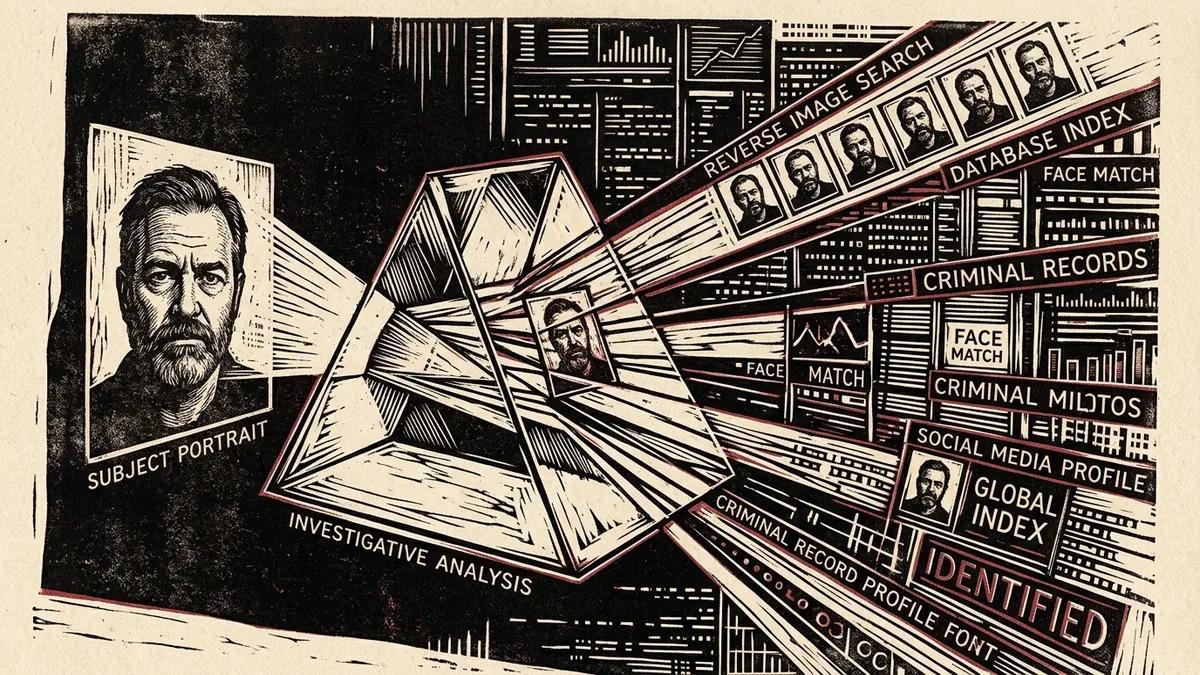
For the average web user, reverse image search begins and ends with Google. But for open-source investigators and fact-checkers investigating contested conflict footage or viral disinformation campaigns, relying exclusively on Google is an operational liability. Google’s computer vision algorithms are optimized for commercial intent—identifying consumer merchandise, tourist landmarks, and high-traffic Western news stories—rather than unearthing obscure forum threads, regional social posts, or forensic matches.
As emphasized in our core OSINT Verification Handbook, discovering the true origin of a photograph requires navigating a diverse ecosystem of visual search engines, each built upon fundamentally different computer vision architectures. This guide outlines how to deploy advanced reverse search workflows across TinEye, Yandex, Bing, and biometric engines to penetrate digital evasion techniques.
1. The Core Algorithmic Divide: Perceptual Hashing vs. Semantic Vectors
To select the right tool, an investigator must understand how different search engines “see” an image:
                      INCOMING SUSPICIOUS IMAGE
                                  │
         ┌────────────────────────┴────────────────────────┐
         ▼                                                 ▼
[Perceptual Hashing (pHash)]              [Deep Semantic Vectors (Neural)]
 Engine: TinEye                            Engines: Google Lens, Yandex, Bing
 • Reduces image to 64-bit frequency       • Extracts high-level conceptual features
 • Matches identical pixel structures      • Matches "similar scenes", not identical files
 • Immune to minor crops/compression       • Identifies landmarks, objects, and faces
 • Finds exact same image across web       • Returns related concepts, often losing source
- Perceptual Hashing (TinEye): Generates a mathematical digest based on the low-frequency structure of the image. It looks for the exact same photograph, even if someone resized it, compressed it, or added a small watermark.
- Deep Neural Embeddings (Google Lens, Bing): Converts the image into multi-dimensional mathematical vectors using Vision Transformers. It looks for semantically similar things—meaning if you upload an image of a destroyed tank in a field, Google will show you thousands of other destroyed tanks in other fields, obscuring the specific image you are attempting to trace.
2. TinEye: The Master of Chronological Provenance
TinEye is the undisputed instrument for establishing when a photograph first appeared on the public internet.
The “Oldest First” Tactic:
- Upload your suspicious image to TinEye.
- In the results toolbar, switch the dropdown from “Best Match” to “Oldest”.
- Examine the earliest indexed domain, URL, and crawler date.
Investigative Payoff: If a photograph currently viral on social media is claimed to depict a riot that occurred yesterday, but TinEye reveals the image was crawled on a Polish blog in March 2017, the claim is definitively debunked in under thirty seconds.
The “Most Changed” Tactic:
Sorting by “Most Changed” reveals versions of the image where someone has cropped, expanded, recolored, or photoshopped elements. This immediately exposes whether an original crowd size has been digitally multiplied or if a political figure has been edited into an unrelated scene.
3. Yandex Visual Search: Unrivaled Non-Western and Facial Indexing
While Western journalists frequently overlook Russian search giant Yandex, it possesses the most aggressive facial recognition and unstructured web-crawling algorithm accessible on the public web.
Why Yandex Outperforms Google in Conflict Reporting:
- Facial Geometry Extraction: Yandex extracts biometric facial landmarks even from grainy, partially angled, or low-resolution surveillance stills.
- Deep Regional Crawling: Yandex exhaustively indexes VKontakte, Telegram channels, Central Asian forums, and Eastern European bulletin boards that Google either deprioritizes or fails to index entirely.
- Military Insignia & Camouflage: Yandex frequently matches military uniform patches, tactical gear, and vehicle markings directly to specialized military enthusiast forums.
4. The Isolated Crop Technique: Defeating Evasion Tactics
Disinformation actors routinely alter media to thwart reverse search algorithms: * Horizontally flipping (mirroring) the image. * Adding a high-contrast artificial color tint or vignette frame. * Cropping out 30% of the peripheral edges.
When full-frame reverse search returns zero results, deploy the Isolated Crop Methodology:
┌────────────────────────────────────────────────────────┐
│ [FULL FRAME: Recycled Protest Photo - Search: NO MATCH]│
│                                                        │
│   [Crowd Foreground]      [REVERSE SEARCH THIS CROP]   │
│   (Too generic / fails)   ┌──────────────────────────┐ │
│                           │ 🔲 Distinctive Storefront │ │
│                           │    Architectural Balcony │ │
│                           │    Street Sign Letters   │ │
│                           └──────────────────────────┘ │
└────────────────────────────────────────────────────────┘
- Open the image in an editor or inspect it locally via our Digital Media Verification Navigator.
- Crop down to a 200 × 200 pixel tile containing a unique static element:
- An unusual storefront awning or business logo.
- A distinctive architectural balcony or iron fence.
- A transmission tower, bridge support, or statue base.
- Upload only that small cropped fragment to Yandex and Google Lens.
- The algorithms will be forced to match the unique structural geometry rather than the confusing crowd foreground.
Crop & Query Across Engines in the Reverse Search Hub
Defeat evasion crops and mirrors directly on our interactive HTML5 canvas. Calculates 64-bit dHash & aHash visual fingerprints, lets you drag-to-crop suspicious sub-regions, and launches 1-click simultaneous searches across Google Lens, TinEye (Oldest first), Yandex, and Bing.
Launch Reverse Visual Search Hub →5. Biometric Facial Search Engines: PimEyes and Ethical Guardrails
For high-stakes investigations involving war criminals, human rights abusers, or unidentified victims, specialized facial recognition search engines like PimEyes and FaceCheck.id represent a quantum leap in investigative capability.
Unlike Google, PimEyes does not search for identical photographs; it searches for the biometric face print of a human subject across billions of indexed web pages.
Crucial Methodological Guidelines:
- Treat Matches as Leads, Never Proof: A high-confidence biometric match suggests a potential identity, but requires independent documentation (passport records, family confirmation, institutional rosters).
- Beware AI Hallucinations & Lookalikes: Facial recognition algorithms experience elevated error rates on low-resolution, angled, or non-Caucasian facial structures.
- Human Rights & Privacy Compliance: Adhere strictly to the Berkeley Protocol on Digital Open Source Investigations. Never deploy facial search engines against private civilians, minors, or vulnerable whistleblowers.
Multi-Engine Search Workflow Summary
| Investigative Goal | Primary Recommended Engine | Fallback Engine | Optimal Setting |
|---|---|---|---|
| Find First Web Appearance | TinEye | Google Images | Sort by: “Oldest” |
| Identify Human Face / Military Figure | Yandex Visual | PimEyes / FaceCheck | Crop closely to face |
| Identify Commercial Vehicle / Architecture | Google Lens | Bing Visual Search | Isolate vehicle grill / facade |
| Locate Higher Resolution Original | TinEye | Yandex Visual | Sort by: “Biggest Image” |
| Identify Non-Western Social Post | Yandex Visual | Baidu Visual | Query background signage |
By systematically pivoting across these specialized engines and combining them with open-source geolocation tools and video keyframe extraction, researchers build unshakeable evidentiary chains that withstand digital manipulation.
Run private client-side metadata scans and launch reverse lookups with the Digital Media Verification Navigator.
How to Trace Image Provenance Across Multiple Reverse Search Engines
Advanced reverse image search workflow for identifying the earliest online publication of an image.
- Compute Perceptual Hashes: Generate dHash and aHash visual fingerprints to quantify image uniqueness.
- Query TinEye Sorted by Oldest: Submit the image to TinEye and sort results by 'Oldest' to locate the original, earliest indexed appearance on the web.
- Crop High-Specificity Background Sub-Regions: Crop non-central background details (e.g. building facades, street signage) to bypass facial recognition filters and watermarks on Yandex and Google Lens.
- Cross-Reference Biometrics and Alternate Networks: Use Yandex Visual Search for facial matching and VK/Eastern European network coverage.
Frequently Asked Verification Questions
Key technical principles, error traps, and diagnostic standards for investigative researchers.
Why is TinEye preferred over Google Lens for establishing image provenance?
How does sub-region cropping help in reverse image searches?
Trace Image Provenance & Crop Suspicious Fragments
Calculate perceptual dHash and aHash fingerprints, crop target sub-regions on an interactive canvas, and dispatch queries to Google Lens, TinEye (Oldest first), and Yandex simultaneously.
About the Contributor
The Dawat Forensic Research Desk specializes in computer vision forensics, disinformation tracking, and open-source verification methodologies.
Related Research & Dispatches

How to Detect AI Voice Clones and Deepfake Audio: The Forensic Acoustic Guide
A step-by-step diagnostic workflow for uncovering synthetic voice generation, neural audio compression artifac...
How to Tell if an Image is AI-Generated: 7 Diagnostic Tests for Midjourney, DALL-E, and Flux
A forensic methodology for identifying synthetic images, detecting diffusion model artifacts, analyzing freque...

How to Strip EXIF Metadata from Photos on iOS, Android, macOS, and Linux: The OpSec Field Manual
A definitive operational guide for investigative reporters, whistleblowers, and human rights advocates to sani...