How Independent Newsrooms Monetize in the Algorithmic Age: Beyond Advertising
The collapse of programmatic display ads, the rise of sovereign subscriber revenue, philanthropic foundations, and specialized data intelligence products.
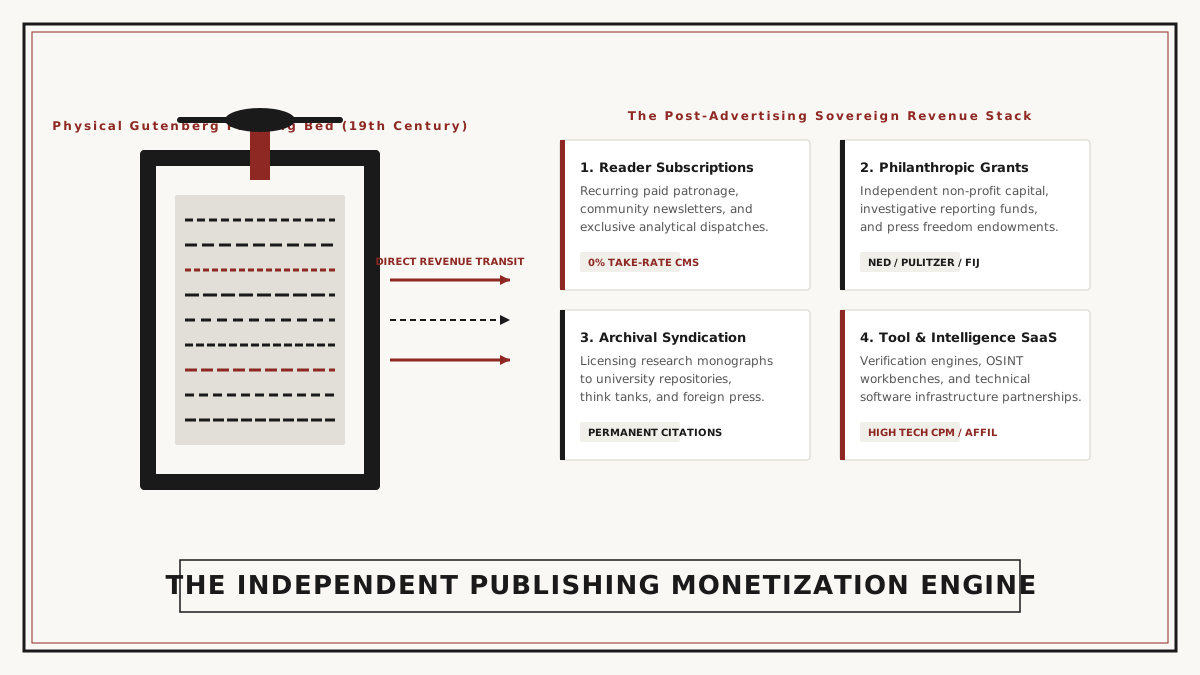
For nearly three decades, the commercial digital publishing industry was built on a catastrophic premise: that independent journalism could be financed by trading audience attention for fractions of a cent through programmatic display advertising networks.
By 2026, that bargain has definitively collapsed. The Google-Meta ad duopoly, compounded by programmatic ad exchanges taking 50–70% intermediary cuts, automated ad-blocking adoption exceeding 40% among educated demographics, and algorithmic social platforms (X, Facebook, Google Search AI Overviews) zero-clicking publisher traffic, has rendered the traditional “ad-supported website” economically unviable for serious reporting.
Yet, amid this collapse, a counter-revolution has taken root. A new generation of independent publications, investigative collectives, and cultural repositories are flourishing not by pursuing commodity viral scale, but by cultivating high-yield, sovereign, multi-pillar revenue stacks.
Drawing from Dawat Free Media’s twenty-two years of operational continuity as an independent, non-subsidized publication, this guide analyzes how modern newsrooms build resilient, editorially uncompromised business models in the post-advertising era.
1. The Death of the Ad-Centric Business Model
Understanding the modern newsroom balance sheet requires dissecting why the advertising model failed:
                      THE COLLAPSE OF PROGRAMMATIC ARBITRAGE

    1998–2010 (The Banner Golden Age)          2020s (The Algorithmic Trap)
    ┌───────────────────────────────┐          ┌───────────────────────────────┐
    │ High CPMs ($15–$30)           │          │ Programmatic Decay ($0.80 CPM)│
    │ Direct Sponsor Relationships  │ ───────▶ │ Duopoly Intermediary Ad Cuts  │
    │ Organic Search Traffic Flow   │          │ Search Generative Zero-Clicks │
    │ Sustainable Local Newsrooms   │          │ Clickbait Content Mill Squeeze│
    └───────────────────────────────┘          └───────────────────────────────┘
When a publication depends on banner advertising: * The Traffic Treadmill: To pay a single reporter’s modest salary, the website must generate millions of pageviews every month. This forces editors to prioritize clickbait headlines, sensationalized aggregations, and celebrity ephemera over patient, high-impact investigative accountability. * Algorithmic Extortion: The newsroom becomes a vassal state to Google and Meta algorithm updates. A minor tweak to Google’s Helpful Content Classifier or Facebook’s referral pipeline can obliterate 60% of a publisher’s operating budget overnight. * Malvertising & Reader Alienation: Programmatic ad scripts bloat page weight, slow Time to First Byte (TTFB) to five seconds, compromise reader privacy through behavioral tracking cookies, and introduce security vulnerabilities.
The Post-Ad Axiom: It is infinitely more sustainable to have 2,000 passionate readers paying \$100 annually than to chase 2,000,000 fleeting visitors generating \$0.10 in programmatic display ads.
2. The Four Pillars of the Sovereign Publishing Stack
Resilient independent media organizations decouple from platform volatility by diversifying across four distinct, non-advertising revenue channels:
┌────────────────────────────────────────────────────────────────────────┐
│               THE 4-PILLAR SOVEREIGN MEDIA BALANCE SHEET               │
├──────────────────────┬────────────────────┬────────────────────────────┤
│ 1. Reader Patronage  │ 2. Philanthropic   │ 3. Specialized Data &      │
│    & Memberships     │    Grants          │    Interactive SaaS Tools  │
│ (The Predictable Bed)│ (High-Impact Capital│ (Passive Authority Monetiz)│
├──────────────────────┼────────────────────┼────────────────────────────┤
│ 4. Archival & Academic Syndication        │ Institutional Independence │
│ (Permanent Citations & Library Endowments)│ (Zero Corporate Subsidies) │
└───────────────────────────────────────────┴────────────────────────────┘
3. Direct Reader Subscriptions & Sovereign Membership Tiers
The core of modern media independence is the direct contract between journalist and reader.
Paid Subscriptions vs. Patronage Memberships:
- The Transactional Paywall (The Atlantic / NYT model): Readers pay for access to locked articles. While effective for massive legacy mastheads, hard paywalls restrict public-interest investigative impact and impede social citation.
- The Open-Access Membership Model (The Guardian / Dawat model): All investigative reporting, cultural monographs, and verification guides remain 100% free and open to the public. Readers contribute voluntarily as “Patrons” or “Sustaining Members” precisely because they believe the reporting should be accessible to everyone, including students and activists in authoritarian regimes.
Platform Architecture: Escaping the 10% Platform Tax
When selecting newsletter and membership software, newsrooms face a major technical divide: * Platforms like Substack lower the barrier to entry, but extract a punishing 10% perpetual cut of all gross subscription revenue. * Independent, open-source solutions like Ghost CMS charge zero transaction percentage, allowing publications to retain 100% of their earnings while maintaining direct cryptographic custody over their Stripe customer tokens.
(We deliver an exhaustive technical comparison in our companion guide: Substack vs. Ghost vs. Beehiiv: The Architecture of Creator Publishing Platforms.)
4. Philanthropic Endowments & Press Freedom Grants
Investigative reporting—demanding months of public records litigation, encrypted source handling, and digital forensic analysis—rarely covers its costs through individual reader subscriptions alone.
Independent newsrooms bridge this gap through philanthropic grants and reporting endowments: * Project-Specific Funding: Foundations like the Pulitzer Center on Crisis Reporting and the Fund for Investigative Journalism (FIJ) provide \$5,000 to \$20,000 travel and expense grants for individual investigative series. * Core Institutional Support: Organizations like the National Endowment for Democracy (NED), the Open Society Foundations, and the European Journalism Centre (EJC) provide multi-year operational grants to sustain independent newsrooms operating under political exile or authoritarian censorship.
(Consult our vetted directory and proposal frameworks in: The Complete Grant Directory for Independent Journalists.)
5. Specialized Diagnostic Tools & Technical Software Partnerships
One of the highest-yield, most neglected monetization engines for digital publications is the deployment of bespoke client-side tools and technical software directories.
The Passive Authority Mechanism:
- Interactive Utilities as Traffic Drivers: Just as Dawat Free Media deployed the Digital Media Verification Navigator, building specialized calculators, diagnostic checkers, or data visualizers attracts recurring organic traffic from universities, researchers, and professional analysts.
- High-Ticket Privacy & Security Affiliates: When an investigative publication publishes rigorous, audited technical evaluations of cybersecurity software—such as our guides to Audited No-Logs VPNs and Hardware Security Keys—integrating transparent affiliate relationships with ethical providers (Proton, Mullvad, Tresorit) generates \$50 to \$100 CPA payouts per conversion without compromising editorial integrity.
6. Archival Syndication, Academic Licensing & Research Reprints
An aged domain with authentic scholarly citations possesses intellectual property that commercial clickbait blogs can never manufacture: historical authority.
- Academic Coursepacks & Syllabus Licensing: University humanities and international affairs departments license in-depth diaspora monographs—such as our critical evaluations of Khaled Hosseini and Afghan Diaspora Letters—for graduate curricula.
- Think-Tank Research Syndication: Co-publishing investigative reports with defense institutes and foreign policy journals creates dual revenue streams through research stipends and institutional republication fees.
Technical Security: Protecting the Publishing Pipeline
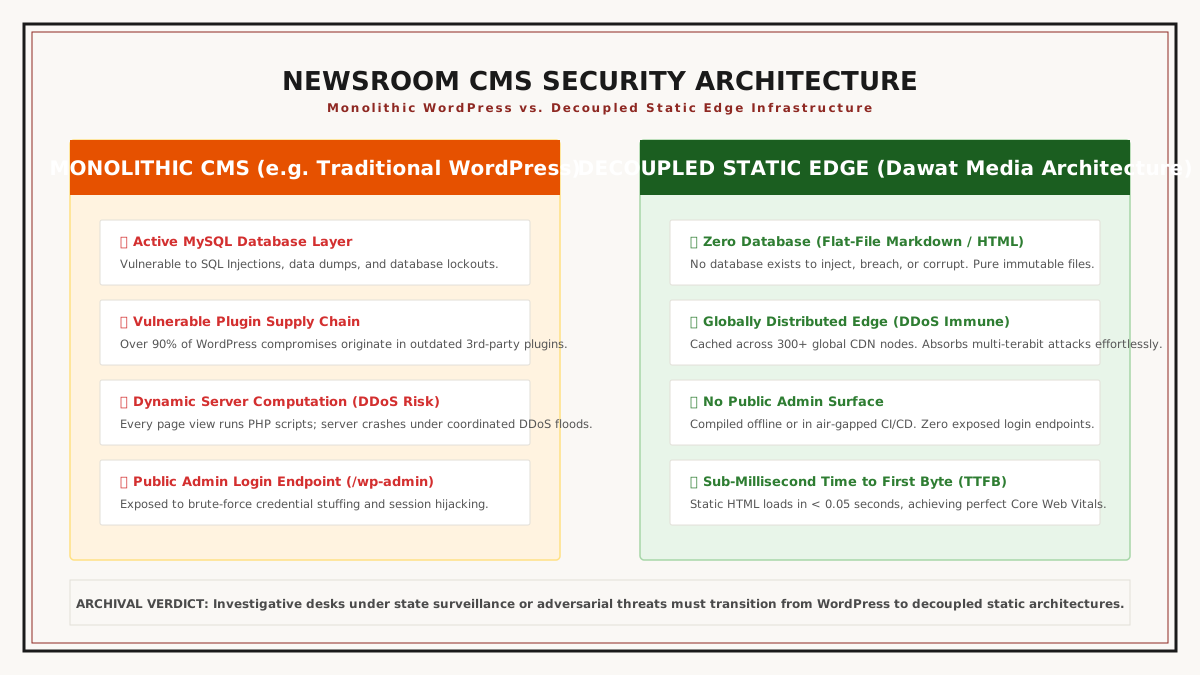
A thriving independent media property under investigative scrutiny will inevitably face cyber retaliation: Distributed Denial of Service (DDoS) attacks, database injection attempts, and credential stuffing.
Hosting an investigative newsroom on monolithic, legacy WordPress infrastructure introduces immense vulnerabilities. Transitioning to a decoupled, headless static edge architecture—rendering flat HTML files compiled offline and served via globally distributed CDNs—ensures your publication remains online even during state-sponsored cyber offensives.
(We examine this infrastructure in: Open-Source CMS Security for Investigative Publications: Decoupling WordPress and Static Sites.)
The Sustainable Publishing Checklist
| Operational Dimension | Vulnerable Legacy Approach | Resilient Sovereign Approach |
|---|---|---|
| Primary Revenue | Programmatic banner ads & popups | Direct reader memberships + grants |
| Audience Relationship | Rented social media followers | Direct email subscribers & RSS |
| Platform Take Rate | 10%–15% commercial platform fees | 0% commission self-hosted / Ghost |
| Site Architecture | Monolithic WordPress with 40 plugins | Decoupled static edge / Jamstack |
| Evidentiary Moat | Generic AI-generated SEO content | Firsthand OSINT tools & archival essays |
Conclusion: The Independent Imperative
The death of the advertising model is not a tragedy for journalism; it is an emancipation. For decades, publishers bent their reporting to appease corporate ad buyers and chase algorithmic dopamine.
By building sovereign, diversified revenue models rooted in reader trust, open-access tools, and institutional rigor, independent newsrooms reclaim their true historical purpose: acting as an uncompromised, un-buyable fourth estate that holds power to account.
Explore platform comparisons in Substack vs. Ghost vs. Beehiiv, or review funding opportunities in The Complete Grant Directory for Journalists.
Open-Source Verification Tools for Researchers
Dawat Free Media maintains a free suite of zero-upload client-side verification engines for journalists, researchers, and civil society investigators.
About the Contributor
The Dawat Media Economics & Sustainability Desk studies publishing technologies, independent newsroom balance sheets, and non-extractive revenue models.
Related Research & Dispatches
How to Verify if a Journal is Indexed in Scopus, Web of Science, or Predatory: The Forensic Scholarly Audit
A rigorous diagnostic procedure for verifying scholarly publication credentials, auditing ISSN registries, cro...

Diaspora Literature in the 21st Century: Exile, Memory, and Cultural Reclamation
An extensive critical examination of how writers in forced migration navigate the geography of memory, the rup...
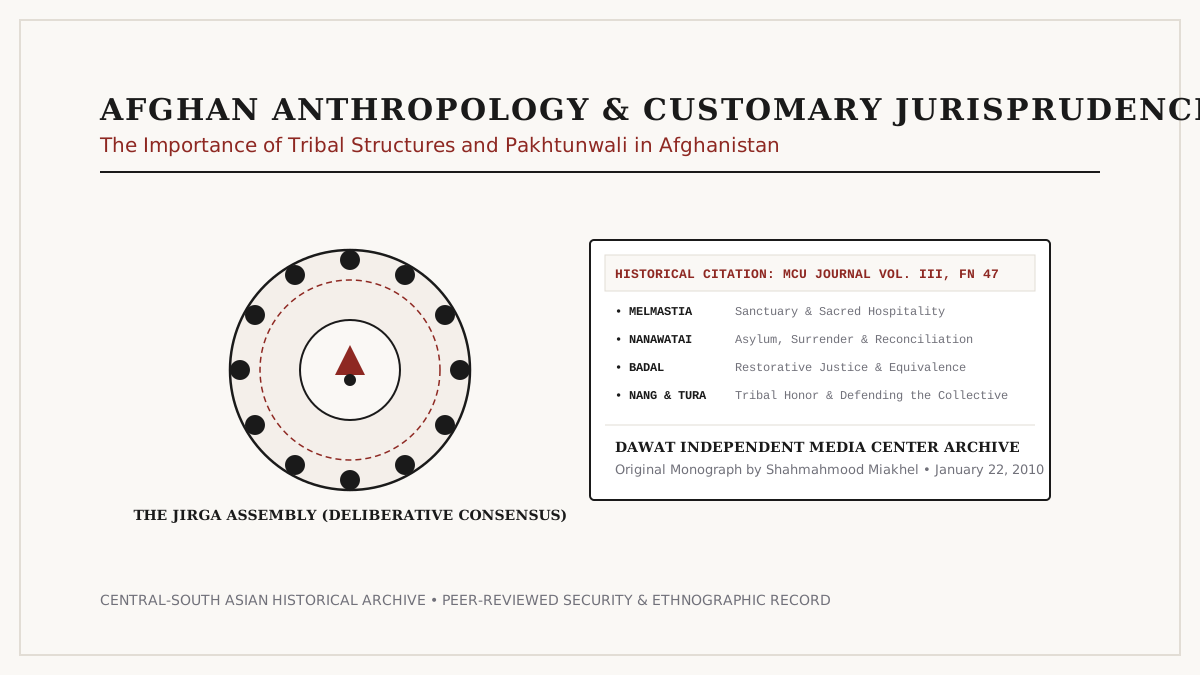
The Importance of Tribal Structures and Pakhtunwali in Afghanistan
A scholarly treatise on customary Pakhtunwali jurisprudence, decentralized tribal cohesion, the mechanics of t...